Boerne Star
Nest Boxes and Citizen Science: A Natural Partnership
By Craig Hensley, Texas Nature Trackers Biologist with Texas Parks & Wildlife Department
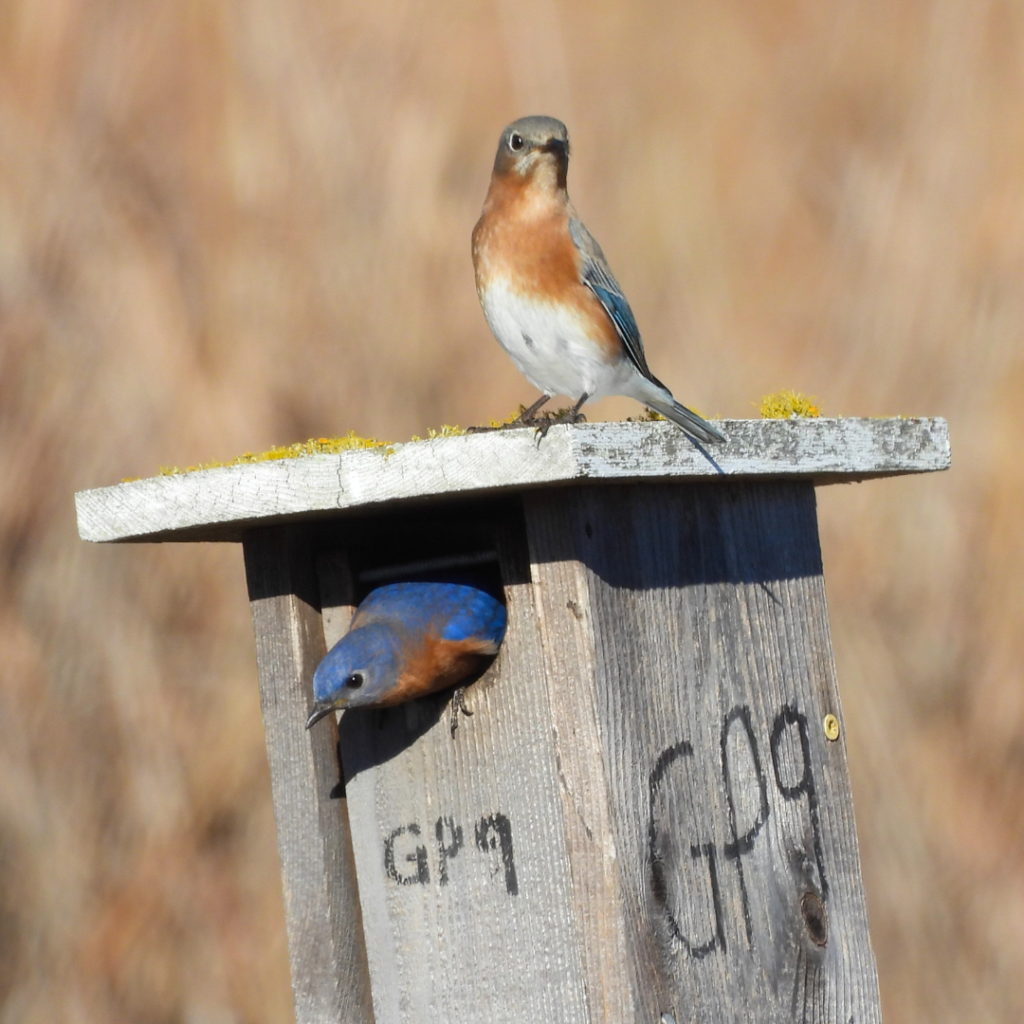
Any walk along the trails of Cibolo Nature Center provides a unique opportunity to explore the natural world, including the chance to see one of the Center’s iconic birds, the Eastern Bluebird. Depicted in Disney movies and sung about as the bluebird of happiness, this now common songbird was once a rare bird in many parts of its range.
Less than 100 years ago the Eastern Bluebird population was in free-fall. Changing land use, the introduction of toxic chemicals, and habitat loss created the perfect storm, sending populations of bluebirds and other species plummeting. Just when the future was dimming for bluebirds, a few pioneering scientists and conservationists began erecting boxes in which bluebirds and other secondary-cavity nesting birds could raise their young – and as was famously quoted in the movie Field of Dreams, the adage of “build it and they will come” came to pass.
In fact, one of the initial projects I was involved with after landing my first job as Naturalist for the Cass County Conservation Board in Atlantic, Iowa in 1982 was working with farmers to place nest boxes along fence lines of pastures and hayfields for bluebirds. I didn’t know it at the time, but those farmers were what we now routinely refer to as citizen scientists.
Cut to Cibolo Nature Center. On any hike today, you will see the same kind of nest boxes we mounted scattered throughout the woodlands, grasslands, and marsh of the nature center. While many songbirds place their nests in trees, shrubs or on the ground, the bluebird needs a pre-existing cavity to construct its nest of grass, for unlike the woodpecker who is adapted to carving out its own nest cavity, the bluebird cannot. Therefore, it must rely on the whims of nature – an abandoned woodpecker cavity or a branch of a rotted tree – or the kindness of strangers, in this case we humans, to raise young.
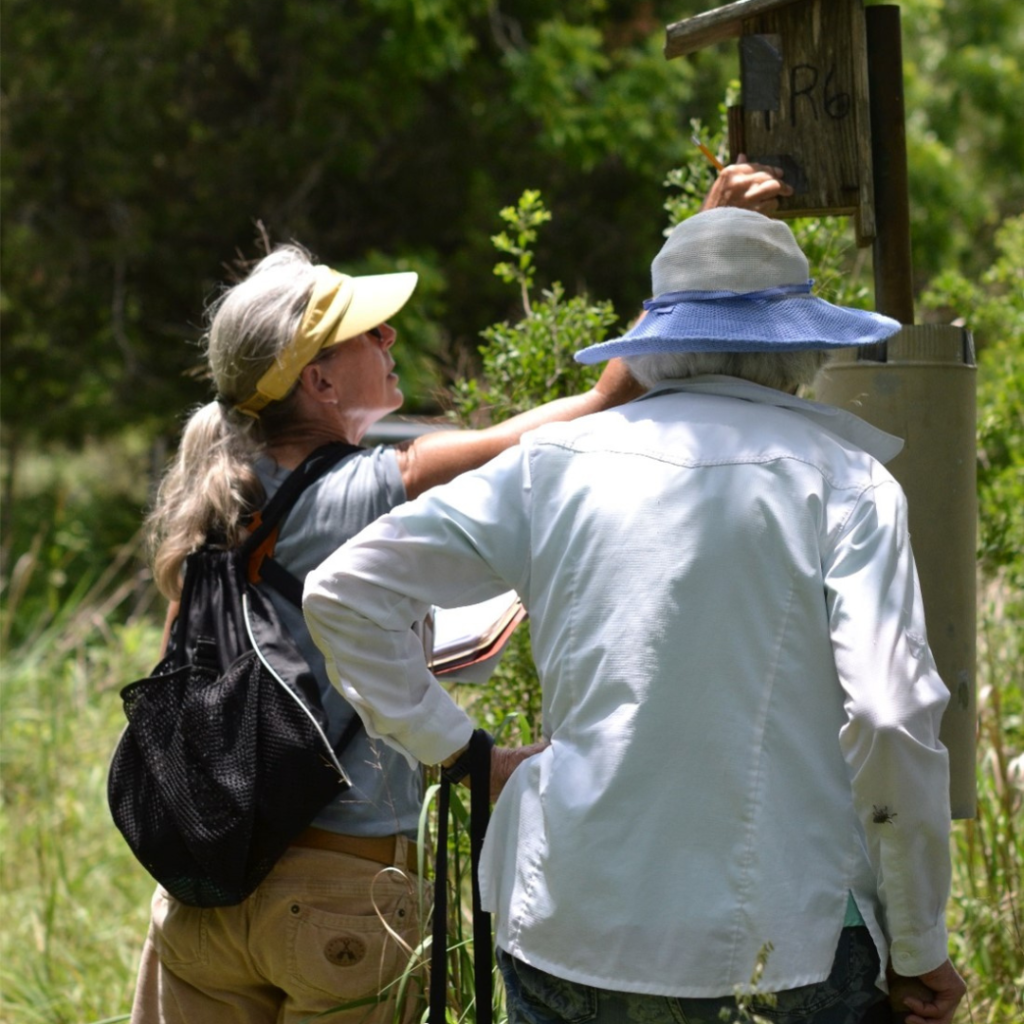
Today at the Cibolo Nature Center, citizen scientists including Texas Master Naturalists, work together to regularly monitor the nest boxes, recording data not only from bluebirds, but other secondary cavity-nesting species such as Carolina Chickadees, Black-crested Titmice, Carolina Wrens, and the occasional Bewick’s Wren. Between mid-March and August, this crew of dedicated citizen scientists visit each box weekly, recording nesting activity including nest building, numbers of eggs and young, and nest success, reporting their observations to the nature center as well as to an online citizen science project known as NestWatch through The Cornell Lab of Ornithology.
In today’s world of ever-shrinking open space for birds and other wildlife, efforts by these nature center volunteers and the millions of other dedicated citizen scientists across the globe performing similar efforts are making a real difference, and not just for the bluebirds and other species they are helping.
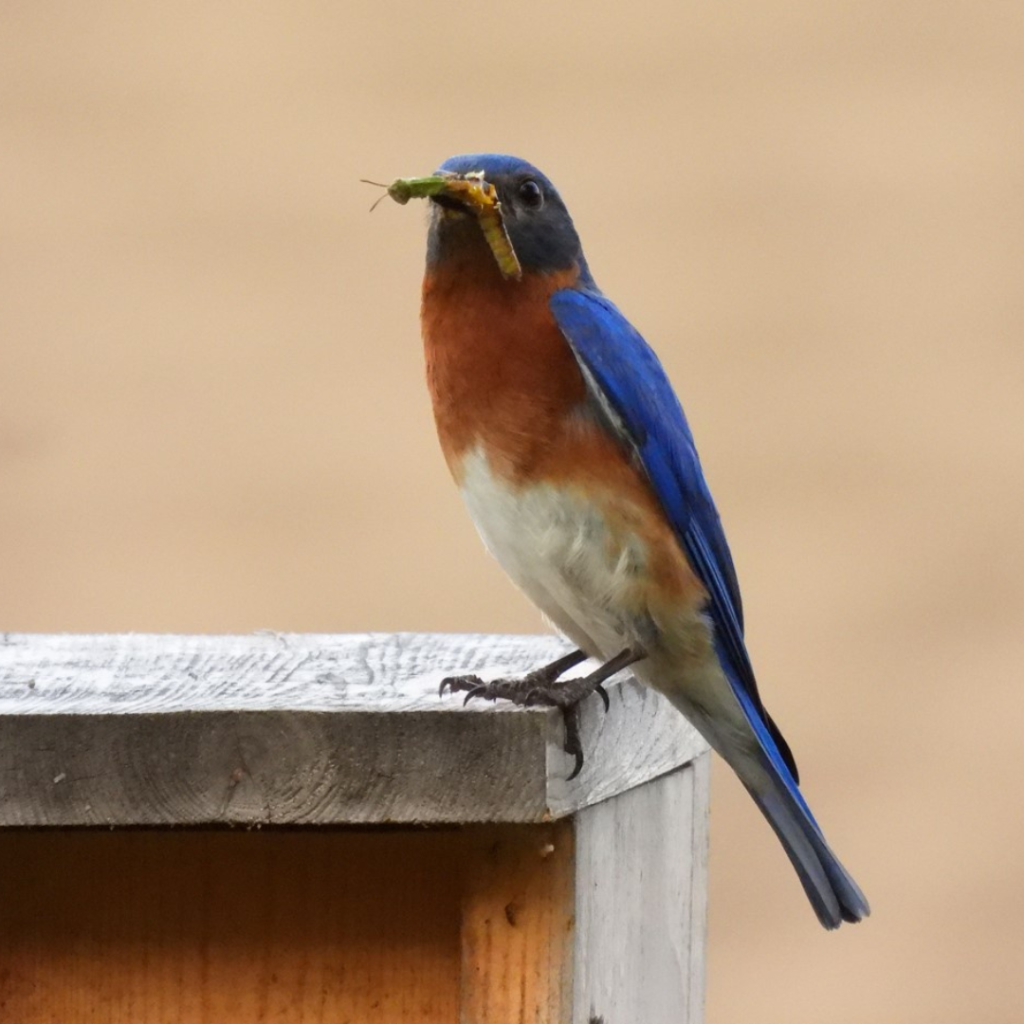
The truth is that their efforts also have a direct impact on you. Just as those Iowa farmers did so many years ago, today’s citizen scientists care enough about this beautifully iconic songbird to provide just what was needed to raise new generations of bluebirds so that you and your children can revel at the sight of a male bluebird taking flight, its deep blue wings, tail and back, lit up by the sun, providing a vision of blue nearly unmatched. Without their efforts, your opportunities to see the “bluebird of happiness” or countless other species found at the nature center would diminish with time.
As a lifelong naturalist, educator, and researcher who has had the honor of holding and banding nestling bluebirds and their parents, I can tell you that there is not one day, one experience in the field where I am not thrilled to hear the distinctive song of a male bluebird, watch a pair of bluebirds as they flutter excitedly at a nest box in early spring, or watch the repeated visits of parents as they feed growing nestlings. Finally, when I see a fledgling, chest full of brown spots, sitting in a tree waiting for a parent to bring a morsel of insect food, I know that the efforts of those bluebird parents, in part due to the efforts of citizen scientists, helped make my joy – and more bluebirds, possible.
Many thanks to those volunteer citizen scientists who dedicate time out of their lives to make a positive difference for nature, for me, and for you. If you would like to learn more about becoming a nest box monitor at the nature center, contact Sarah Vergara at sarahv@cibolo.org.