
General
Finding Resilience in Nature
By Sarah Vergara, Research Scientist
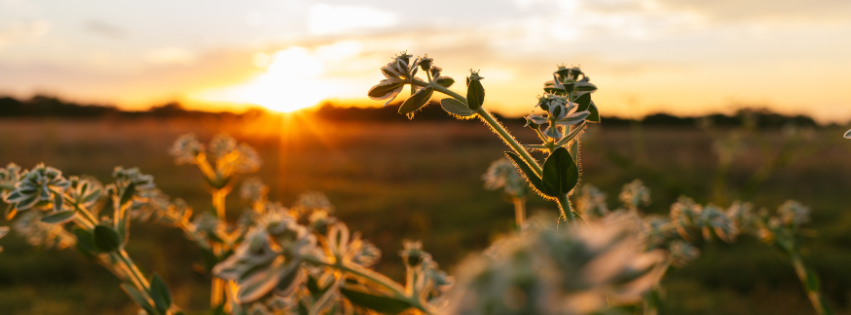
Lately, I’ve been seeing more people, including myself, finding meaning and symbolism in nature. Comparing our life experiences to the natural world. Indeed, it can be one tool in our toolbox to deal with tragedy, grief, or difficult times. For example, light scatters through the atmosphere and is transformed. Plants take up sunlight, and through a process of chemical transformations, converts it into energy in the form of sugar. In a similar way, the light a person gives, can live on within us and is transformed into a different kind of energy, such as creativity, kindness, and passion as we navigate the changing seasons of our lives.
Recently, a kind soul reminded me of something important. We don’t just have night and day; we have intense bursts of light with varying degrees of intensity, subtly fading into unique brilliance in the form of a sunset. And when night comes, even within the night itself, light does not leave us. Distinct shades of blue and purple emerge, guiding creatures to their destination or purpose. Similarly, when we dream, light in the form of wisdom from our surroundings brings us teachings, lessons, and guidance—preparing us to wake up and understand the world through a new lens. The changing hues of our world can inspire us to come together and help us find our own purpose.
In light of the devastating flood events across Texas, New Mexico, North Carolina and beyond, I find myself fluctuating between periods of grief, scientific curiosity, and advocacy. Seeing destruction of storms, lives lost, and destroyed habitats can often make one lose hope.
I often think of how nature is somewhat of a kaleidoscope—it is periodically changing and there is never just one “shape” acting on its own. Just like shapes in a kaleidoscope transform into different patterns, living things and non-living processes can shapeshift and seem similar but different, changing as the clock ticks, seasons pass, and weather brews and pours into the land. A raging river can drastically change the shape and function of the land. As we trudge through grief and the changing expanse of the environment, we often find hope through new interactions with people and wildlife.
A simple walk in nature can subtly change your perspective. When walking through the nature center daily there are new discoveries. You can walk out to the woodland trail on a random Tuesday at 3:37pm and see a red shouldered hawk perched on a tree ready to swiftly ascend over the prairie, or find a four-lined skink trapped in a spider web, or a juvenile summer tanager exploring its new territory. Things in the wild have special timing and sometimes we are only lucky to witness their transformations.
Like a kaleidoscope, with each passing turn, patterns form and change. The shapes find new connections or interactions with other pieces, pieces to a larger puzzle. Seeds sprout, stalks and flowers bloom, seed pods form and sometimes abundance and diversity changes based on a variety of factors such as light, temperature, and precipitation. An ephemeral creek can change rapidly; with a turn of a dial, stormwater runoff can break through a barrier and form a flash flood. Droughts can linger over swaths of land for multiple years, with increasing levels of frequency and intensity. And heavy thunderstorms can descend over the hill country with varying levels of speed and intensity. These are natural processes, that can be enhanced by atmospheric conditions and have varying levels of frequency and intensity, depending on what region you live in.
If weather events can be so extreme and dangerous, then why does nature allow such things to happen? When a heavy rainstorm or hurricane comes through and knocks down an upper canopy tree, lower story trees can now seize the opportunity and grow higher and more abundant basking in heavier sunlight. A controlled fire in a prairie can provide rejuvenation and nourishment to wildlife and the land.
At the same time, more frequent and intense extreme events will occur and living organisms may not have a way to quickly adapt and evolve to a changing climate. We can slow this process by doing many things, but one way is to create habitat, or connections within the wildlife-urban interface. Migratory species like birds and butterflies will be thankful for extra stopping points or “flight connections” along their long journey. Here at the Cibolo Center for Conservation we have ecosystems that also act as natural buffer or filtration systems, such as the Marsh and Riparian areas. When large amounts of rainfall and runoff occurs, it is held in place and allowed to filter through the soil, contaminants attach to soil particles and plants can uptake nutrients and water necessary for growth. And trails with mulch hold moisture in place, allowing it to better seep through enriched soil compared to dry, less permeable soil. Excess runoff and sediment have been prevented from entering the stream and some hazardous flash flood conditions can be avoided.
I often think about community when I think about wildlife at The Cibolo. Each habitat has its own unique function and importance that it brings to the landscape. Like people, we each bring our own set of skills, experience, and unique perspectives to improve our community and environment. And just like water, we need to shape this land with good intention, and in some cases let things grow as nature intended.
Volunteer to steward the land at local parks or your own front and backyard. Advocate for less development and more sustainable infrastructure. Help your community when in need. Stay curious and leap into new conversations. Because even when things get turned upside down, somehow you can find beauty and solid ground in community.
“And in the wild of changing things, we learned to fly anyway.” — Morgan Harper Nichols
This article is dedicated to Ernesto Geronimo Vergara, friends and family.